Philosophy

The Kingdom Within: Jesus’ Inward Reign vs. Paul’s Doctrine of Salvation by Blood

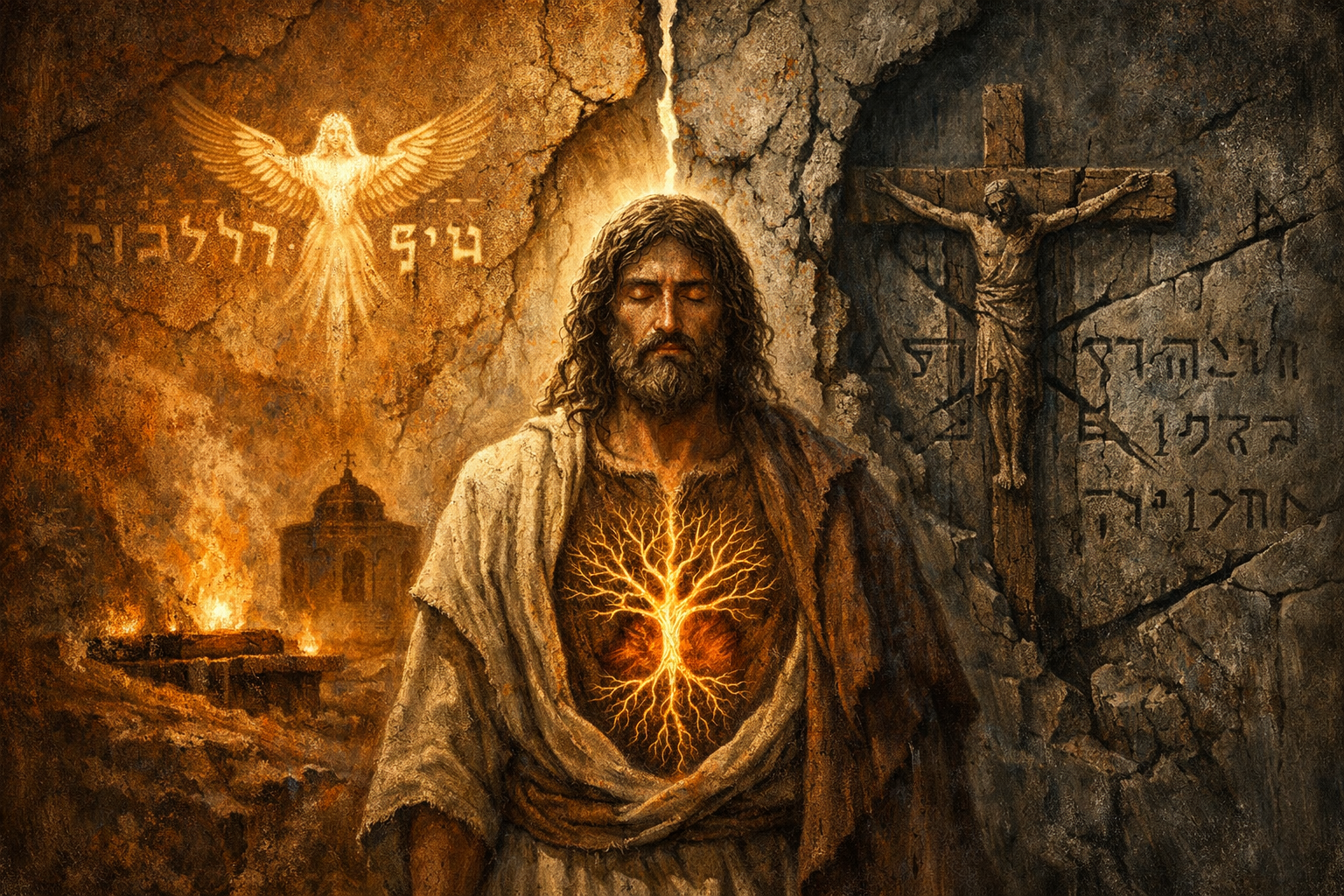
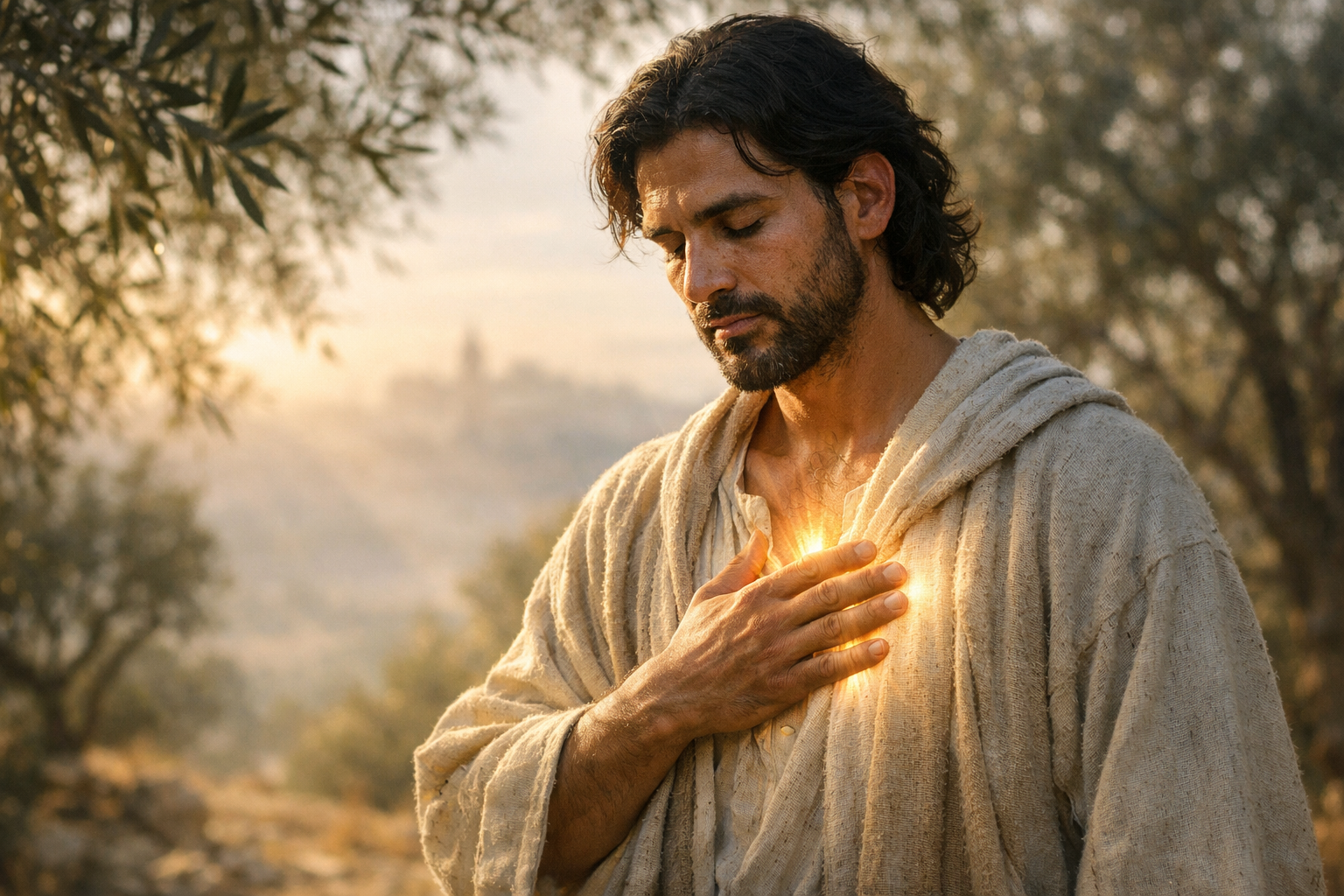
What if the heart of the gospel is quieter, more intimate, and more demanding than many of us were taught? In Luke 17:21, Jesus looks the Pharisees in the eye and says, “The kingdom of God is within you.” Not a future political takeover. Not a visible throne replacing Caesar. Not even a new religion. An inward reality, the living God taking up residence in the secret place of the devotional conscience, creating cleanness where there was shame, renewing a spirit that was once fractured. This is the ancient prayer of Psalm 51:10 made flesh: “Create in me a clean heart, O God; and renew a right spirit within me.”

I believe it is well for us to hold this inward kingdom beside the gospel Paul later proclaimed and to notice, with clear-eyed honesty, how strikingly different the emphases are.

Rebecca Lalhmangaihzuali (n.d.) places Paul firmly in the shadow of the Roman Empire. Paul’s “kingdom of God” functions as resistance language — righteousness, peace, and joy in the Holy Spirit (Rom 14:17) set against empire’s “peace through victory.” Yet even in this political reading, the kingdom remains something experienced now by believers (1 Cor 4:20), a present spiritual reality.

Pamela Eisenbaum, through David Matthew’s (2009) synopsis, insists Paul never left Judaism. He was called, not converted. His letters are Jewish sectarian literature; the word “Christian” did not yet exist. Paul’s mission was never to replace Torah with a new system but to open Israel’s covenant blessings to Gentiles as Gentiles.

Bruce R. Booker (2009) presses the contrast further. Jesus declares in Matthew 5:17-19 that he came not to abolish the Torah but to fulfill it, even down to the smallest yod. Anyone who annuls even the least commandment and teaches others to do so will be called “least in the kingdom of heaven.” Booker reminds us that Jesus himself gave the law at Sinai (Exod 24). The fulfillment Jesus offers is inward obedience and heart renewal, precisely the clean heart and renewed spirit of Psalm 51:10.

Here the difference becomes most visible, and also most historically telling. Jesus never once blatantly confessed or taught that salvation comes through faith in his own blood. He never presented his death as the mechanism by which sins are atoned for through believing in a substitutionary sacrifice. His message was the kingdom of God — repent, the kingdom is at hand (Mark 1:15); do the will of the Father; let the reign of God transform you from within. And if you are mindful of the bread (body) and wine (blood) ritual presented in the gospels at passover, this is indeed something copied from Paul and pasted into those narratives by the gospel authors; as opposed to Paul’s mythical pagan Jesus, the real Hebrew man would not have made such a clearly pagan statement.

Paul, however, makes faith in his Christ’s blood the central saving reality. He writes of being “justified by his blood” (Rom 5:9), of redemption “through his blood” (Eph 1:7), and of God putting Christ forward as a propitiation by his blood, to be received by faith (Rom 3:25). He insists we are justified not by works of the law but through faith in “Jesus Christ” (Gal 2:16). This is a distinctly Pauline sentiment.

Kyle C. Dunham (2006) describes the present “kingdom of the Son” (Col 1:13) as a hidden, mustard-seed reality already sprouting in the hearts of believers (Matt 13). Yet even here, Paul interprets the kingdom through the lens of his Christ’s sacrificial death and resurrection in ways Jesus’ own preaching never did.

Now layer in the evident historical reality of the gospels and of Paul’s voice: Paul wrote first — from the late 40s AD to the late 60s AD. The Gospels came later. Mark, the earliest Gospel, was composed around 70 AD — ten to twenty years or more after Paul’s active ministry and likely after his death. Nowhere in any of Paul’s surviving epistles does he cite or describe a Galilean preacher who performed miracles, taught in parables, or was born of a virgin. Paul’s letters contain no reference to the empty tomb stories, the Sermon on the Mount, the Lord’s Prayer, or any specific earthly details that fill the Gospel narratives. Paul’s epistles do not sincerely confirm anything within the Gospels.

Instead, the Gospels appear to rework Paul’s theological sentiments; his cross-centered atonement, his faith-apart-from-law emphasis; into the form of a historical biography, writing as if documenting an actual person who walked in Galilee.

Jesus taught the kingdom of God as an inward dispensation; a transformative reign breaking into the human heart here and now. Paul taught salvation through faith in the blood of a Jesus who, in the writings we have from Paul himself, bears little resemblance to the Gospel portrait, because the Gospels had not yet been invented while Paul was alive.

The difference stands. One vision calls us into inwardly embracing the quiet, demanding presence of the living God’s words; the other centers rescue on faith in a blood sacrifice of a Christ whose earthly life and teachings Paul never once quotes or alludes to in detail. What does that divergence ask of us today?

 References

Booker, B. R. (2009). The Problem with Paul. Chicago

Dunham, K. C. (2006). THE KINGDOM OF CHRIST AND OF GOD: A TRADITIONAL.

Eisenbaum, P. (2011). Paul was not a Christian. HarperOne.

Lalhmangaihzuali, R. EKKLESIA: A NEW PARADIGM IN PAULINE CONCEPT KINGDOM OF GOD.
Was Jesus a Rewritten Egyptian Savior?

The story of Jesus in the New Testament does oddly capture attention—a man of compassion, who heals, teaches, dies, and rises again, bringing a message of hope and renewal. Yet older writings from over a century ago reveal something intriguing: many elements in this account seem to mirror ideas and images from Egyptian mythology, as if the Gospel writers drew from a much older stream of human imagination about its divine figure and salvation.

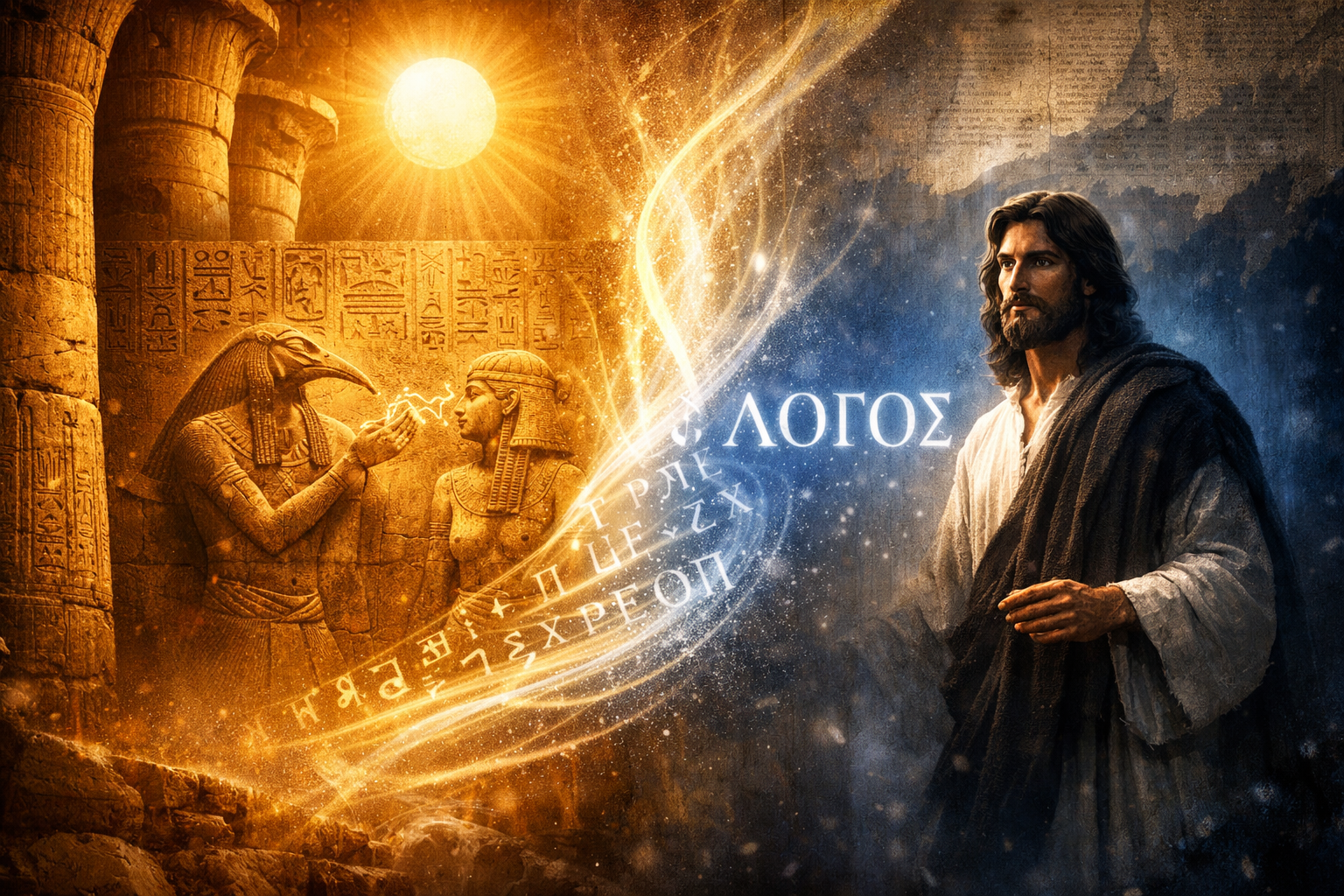
Gerald Massey, in The Historical Jesus and the Mythical-Christ, carefully laid out his case. He separated a possible real person—Jehoshua Ben-Pandira, a teacher mentioned in the Talmud, executed as a sorcerer around 70 BCE or earlier—from the "mythical Christ" described in the Gospels. Massey focused on the virgin birth as one clear link. In Egyptian tradition, this idea appears in temple art long before Christianity. At the Temple of Luxor, built under Pharaoh Amenhotep III in the 18th Dynasty (around 1400 BCE), wall reliefs show a divine conception and birth (something I have already blogged about). The maiden queen Mut-em-ua receives an announcement from the god Thoth (the ibis-headed scribe and herald), then conceives a child who becomes the divine king. These scenes include an annunciation, a miraculous union involving the god Amun, the shaping of the child on a potter's wheel by Khnum, and the birth itself, attended by protective deities.

Massey saw this sequence—annunciation, divine impregnation without ordinary means, shaping of the child, and sacred birth—as a longstanding pattern and blueprint for how the eternal child enters the world through a virgin-like mother (a pattern that cannot arise from ordinary human events but lives in myth and symbol). He argued that the Gospel virgin birth echoes this ancient motif, where the divine enters the world through a pure vessel, untouched by ordinary generation.

Alice Grenfell, in her article "Egyptian Mythology and the Bible" in The Monist, explored other connections, especially around creation and the power of speech. In Genesis, God creates by speaking: "Let there be light," and it happens. Grenfell connected this to the Egyptian idea of maat kheru (or maa kheru), the "true voice" or creative utterance. Gods and the blessed dead wield this power to bring things into existence—light from their eyes, reality from their words. She noted how the goddess Maat, linked to light and truth, represents this creative force. The offering of Maat to a god becomes a ritual of returning reality to its source.

This idea surfaces again in the Gospel of John: "In the beginning was the Word, and the Word was with God... All things were made by him." The Logos as creator through speech feels oddly close to the Egyptian view that naming and speaking aloud turns potential into being. Grenfell even pointed to Joseph's Egyptian name, Zaphnath-paaneah ("The god spoke, and he lives"), as carrying the same tradition of divine voice granting life.

These parallels do not erase the uniqueness of the New Testament account; all of these myths and their sayings carry their own unique essence. Instead, they suggest that when early Christians shaped their story of the Jesus character, they reached for symbols that already carried deep meaning for people familiar with older traditions. The virgin birth, the divine word bringing life, the savior who overcomes death—these motifs had circulated for centuries along the Nile, expressing humanity's hope for something greater than ordinary existence. To re-hash the same mythology in a new way doesn’t make it any more valid or historical, but serves to open our mind to the allegory that has been passed down.

What emerges is a sense of continuity: ancient Egyptians carved their longing for “divine intervention” into stone, and later writers found ways to express a similar longing through the character of Jesus. The story feels both ancient and fresh, rooted in shared human questions about birth, light, and renewal.

Yet these parallels refuse to sit quietly. To what extent did earlier myths shape the telling of the Jesus narrative? If the story emerged from a distinctly Hebrew or Hellenistic Jewish setting, why does it resonate so strongly with motifs far older and geographically distant? What additional strands from Egypt—or other ancient cultures—remain tied to the New Testament? Looking into these questions invites us to see the Gospels not as literal historical reports, but as participants in a much older allegorical dialogue stretching across civilizations. In that light, the Jesus character may function less as a purely biographical construction and more as a literary embodiment of symbolic truths, crafted to convey meaning through the language of myth, theology, and cultural memory.

CLICK: The Myth of the Virgin Birth and Its Allegory Explained

 References

Grenfell, A. (1906). EGYPTIAN MYTHOLOGY AND THE BIBLE. The Monist16(2), 169–200.

Massey, G. (1900). The Historical Jesus and Mythical-Christ.

Sharpe, S. (1863). EGYPTIAN MYTHOLOGY AND EGYPTIAN CHRISTIANITY. In JOHN RUSSELL SMITH. JOHN RUSSELL SMITH.

The Kingdom of God Is Within You: Why the Cross Silenced Jesus' Awakening

The cross was no accident, but a literary and a philosophical inevitability – a silencing born of the radical wisdom Jesus would have proclaimed. In the Gospel according to Luke, when the Pharisees demanded observable signs of the kingdom's arrival, Jesus answered plainly:

The kingdom of God cometh not with observation: Neither shall they say, Lo here! or, lo there! for, behold, the kingdom of God is within you. (Luke 17:20,21)

This declaration shifts the entire horizon of devotion. The “kingdom” referenced is not a spectacle to be pointed at, not a literal territory or visible empire awaiting conquest. It is an inward reality, a present and transformative experience unfolding within the devotional conversation – in the mind, the heart, the depths of consciousness.

This inward emphasis echoes deeply in the Hebrew Scriptures Jesus knew so intimately. In Psalm 51, David, confronted with the weight of his own error, cries out for inner renewal:

Behold, thou desirest truth in the inward parts: and in the hidden part thou shalt make me to know wisdom. (Psalm 51:6)

And further:

Create in me a clean heart, O God; and renew a right spirit within me. (Psalm 51:10)

The psalm exalts the creation of the inward person; the hidden personal and devotional self where truth from within the scriptures takes root and wisdom is imparted in secret places. The encounter with wisdom’s mercy is profoundly personal: a re-creation through contrition, where the concealed depths become the site of instruction and cleansing. Jesus, rooted in this tradition, radicalizes it. The kingdom breaks in not through outward signs or apocalyptic drama alone, but through this inner awakening, even though the purification of the heart, the renewal of the spirit, and the discovery of the reign of the Bible’s wisdom already accessible within.

Levine (2006) illuminates how thoroughly Hebrew this proclamation remains. Jesus argued from Torah, drew on the prophets, and addressed his fellow Hebrews with a call to covenantal depth rather than mere external conformity. His boundary-crossing inclusion of sinners and outcasts arose from a kingdom manifesting inwardly, through hearts receptive to mercy and compassion. To strip this vision of its Hebrew matrix in later interpretations is to obscure the scandal of a Hellenistic Jewish Jesus whose teaching centered internal devotion over institutional dominance (Levine, 2006).

Sanders (1985) situates Jesus within the eschatological hopes of Judaism, yet highlights how his announcement of the kingdom to the wicked; without demanding prior restitution or ritual purity; upended conventional expectations of external restoration. By pointing to a kingdom that begins in present inner responses and transformed relationships, Jesus made it immediate rather than deferred. The cross emerges as the violent rejection of this nearness: empires and authorities could endure visions of future upheaval, but not a reign that erodes hierarchies by awakening within individuals, dissolving borders of exclusion (Sanders, 1985).

Boyarin (2004) uncovers the once-fluid theological landscape where ideas of divine mediation; such as the Logos or Memra; circulated across Jewish thought without strict partitions. The Johannine prologue, read as a Hellenistic Jewish midrash on creation, reveals a Logos bridging divine and human inwardly. Yet as communities later enforced boundaries through heresiology, this shared possibility was partitioned: crucified in discourse, claimed as Christian orthodoxy or branded Jewish heresy. The individual we would term “Jesus” embodied an awakening that refused such borders, where the presence of wisdom indwells the person, resonating with Psalm 51's inward truth and Luke's kingdom within (Boyarin, 2004).

Philosophically, the cross had to silence this vision because an inward kingdom undermines every external claim to authority. If God's reign is devotional and mental; encountered through scripture's hidden wisdom, personal repentance, and renewed consciousness; no institution, empire, or border can monopolize it. The awakening this Jesus lived invited discovery of wise rule in the inward parts of the devotional character, where truth and a right spirit become the sole authentic sovereignty.

SO, what if the crucifixion was the necessary cost of such revelation? Not a transactional atonement in blood (because it was not), but the reflexive suppression of a light that turns devotion inward, from control toward liberating freedom. Holding Luke 17:20,21 alongside Psalm 51:6 and 51:10 confronts us with our own defenses: which outward structures do we cling to, lest we face the vulnerability of inner awakening? The silenced vision endures as invitation, in that one is encouraged to allow the kingdom to unfold within, where the renewal of the hidden heart reigns supreme.

References

Boyarin, D. (2004). Border lines: The partition of Judaeo-Christianity. University of Pennsylvania Press.

Levine, A.-J. (2006). The misunderstood Jew: The church and the scandal of the Jewish Jesus. HarperCollins.

Sanders, E. P. (1985). Jesus and Judaism. Fortress Press.