
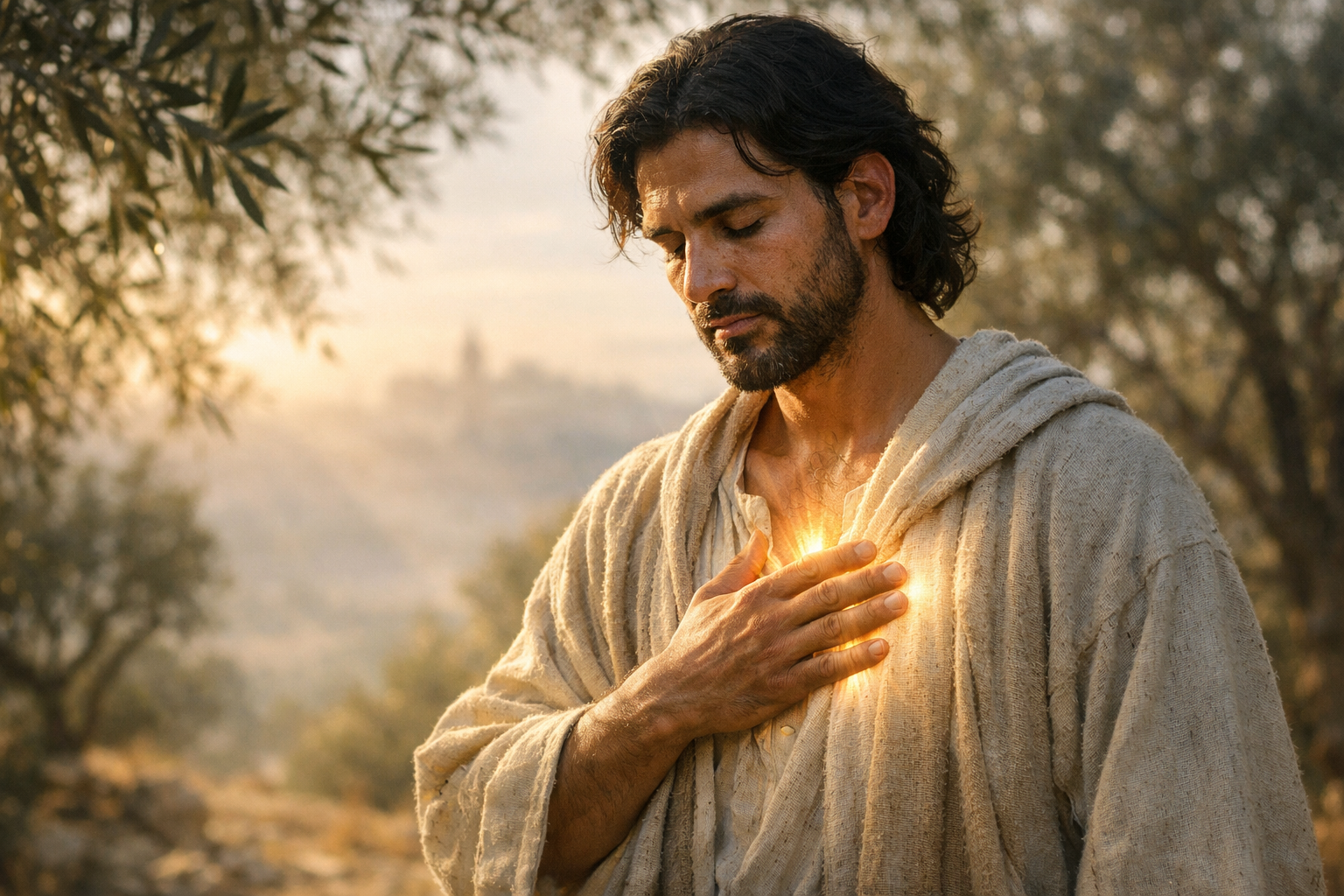
What if the heart of the gospel is quieter, more intimate, and more demanding than many of us were taught? In Luke 17:21, Jesus looks the Pharisees in the eye and says, “The kingdom of God is within you.” Not a future political takeover. Not a visible throne replacing Caesar. Not even a new religion. An inward reality, the living God taking up residence in the secret place of the devotional conscience, creating cleanness where there was shame, renewing a spirit that was once fractured. This is the ancient prayer of Psalm 51:10 made flesh: “Create in me a clean heart, O God; and renew a right spirit within me.”
I believe it is well for us to hold this inward kingdom beside the gospel Paul later proclaimed and to notice, with clear-eyed honesty, how strikingly different the emphases are.
Rebecca Lalhmangaihzuali (n.d.) places Paul firmly in the shadow of the Roman Empire. Paul’s “kingdom of God” functions as resistance language — righteousness, peace, and joy in the Holy Spirit (Rom 14:17) set against empire’s “peace through victory.” Yet even in this political reading, the kingdom remains something experienced now by believers (1 Cor 4:20), a present spiritual reality.
Pamela Eisenbaum, through David Matthew’s (2009) synopsis, insists Paul never left Judaism. He was called, not converted. His letters are Jewish sectarian literature; the word “Christian” did not yet exist. Paul’s mission was never to replace Torah with a new system but to open Israel’s covenant blessings to Gentiles as Gentiles.
Bruce R. Booker (2009) presses the contrast further. Jesus declares in Matthew 5:17-19 that he came not to abolish the Torah but to fulfill it, even down to the smallest yod. Anyone who annuls even the least commandment and teaches others to do so will be called “least in the kingdom of heaven.” Booker reminds us that Jesus himself gave the law at Sinai (Exod 24). The fulfillment Jesus offers is inward obedience and heart renewal, precisely the clean heart and renewed spirit of Psalm 51:10.
Here the difference becomes most visible, and also most historically telling. Jesus never once blatantly confessed or taught that salvation comes through faith in his own blood. He never presented his death as the mechanism by which sins are atoned for through believing in a substitutionary sacrifice. His message was the kingdom of God — repent, the kingdom is at hand (Mark 1:15); do the will of the Father; let the reign of God transform you from within. And if you are mindful of the bread (body) and wine (blood) ritual presented in the gospels at passover, this is indeed something copied from Paul and pasted into those narratives by the gospel authors; as opposed to Paul’s mythical pagan Jesus, the real Hebrew man would not have made such a clearly pagan statement.
Paul, however, makes faith in his Christ’s blood the central saving reality. He writes of being “justified by his blood” (Rom 5:9), of redemption “through his blood” (Eph 1:7), and of God putting Christ forward as a propitiation by his blood, to be received by faith (Rom 3:25). He insists we are justified not by works of the law but through faith in “Jesus Christ” (Gal 2:16). This is a distinctly Pauline sentiment.
Kyle C. Dunham (2006) describes the present “kingdom of the Son” (Col 1:13) as a hidden, mustard-seed reality already sprouting in the hearts of believers (Matt 13). Yet even here, Paul interprets the kingdom through the lens of his Christ’s sacrificial death and resurrection in ways Jesus’ own preaching never did.
Now layer in the evident historical reality of the gospels and of Paul’s voice: Paul wrote first — from the late 40s AD to the late 60s AD. The Gospels came later. Mark, the earliest Gospel, was composed around 70 AD — ten to twenty years or more after Paul’s active ministry and likely after his death. Nowhere in any of Paul’s surviving epistles does he cite or describe a Galilean preacher who performed miracles, taught in parables, or was born of a virgin. Paul’s letters contain no reference to the empty tomb stories, the Sermon on the Mount, the Lord’s Prayer, or any specific earthly details that fill the Gospel narratives. Paul’s epistles do not sincerely confirm anything within the Gospels.
Instead, the Gospels appear to rework Paul’s theological sentiments; his cross-centered atonement, his faith-apart-from-law emphasis; into the form of a historical biography, writing as if documenting an actual person who walked in Galilee.
Jesus taught the kingdom of God as an inward dispensation; a transformative reign breaking into the human heart here and now. Paul taught salvation through faith in the blood of a Jesus who, in the writings we have from Paul himself, bears little resemblance to the Gospel portrait, because the Gospels had not yet been invented while Paul was alive.
The difference stands. One vision calls us into inwardly embracing the quiet, demanding presence of the living God’s words; the other centers rescue on faith in a blood sacrifice of a Christ whose earthly life and teachings Paul never once quotes or alludes to in detail. What does that divergence ask of us today?
References
Booker, B. R. (2009). The Problem with Paul. Chicago
Dunham, K. C. (2006). THE KINGDOM OF CHRIST AND OF GOD: A TRADITIONAL.
Eisenbaum, P. (2011). Paul was not a Christian. HarperOne.
Lalhmangaihzuali, R. EKKLESIA: A NEW PARADIGM IN PAULINE CONCEPT KINGDOM OF GOD.