
isaiah

Why the Gospel of Mark Says Christ Comes From Levi, Not David

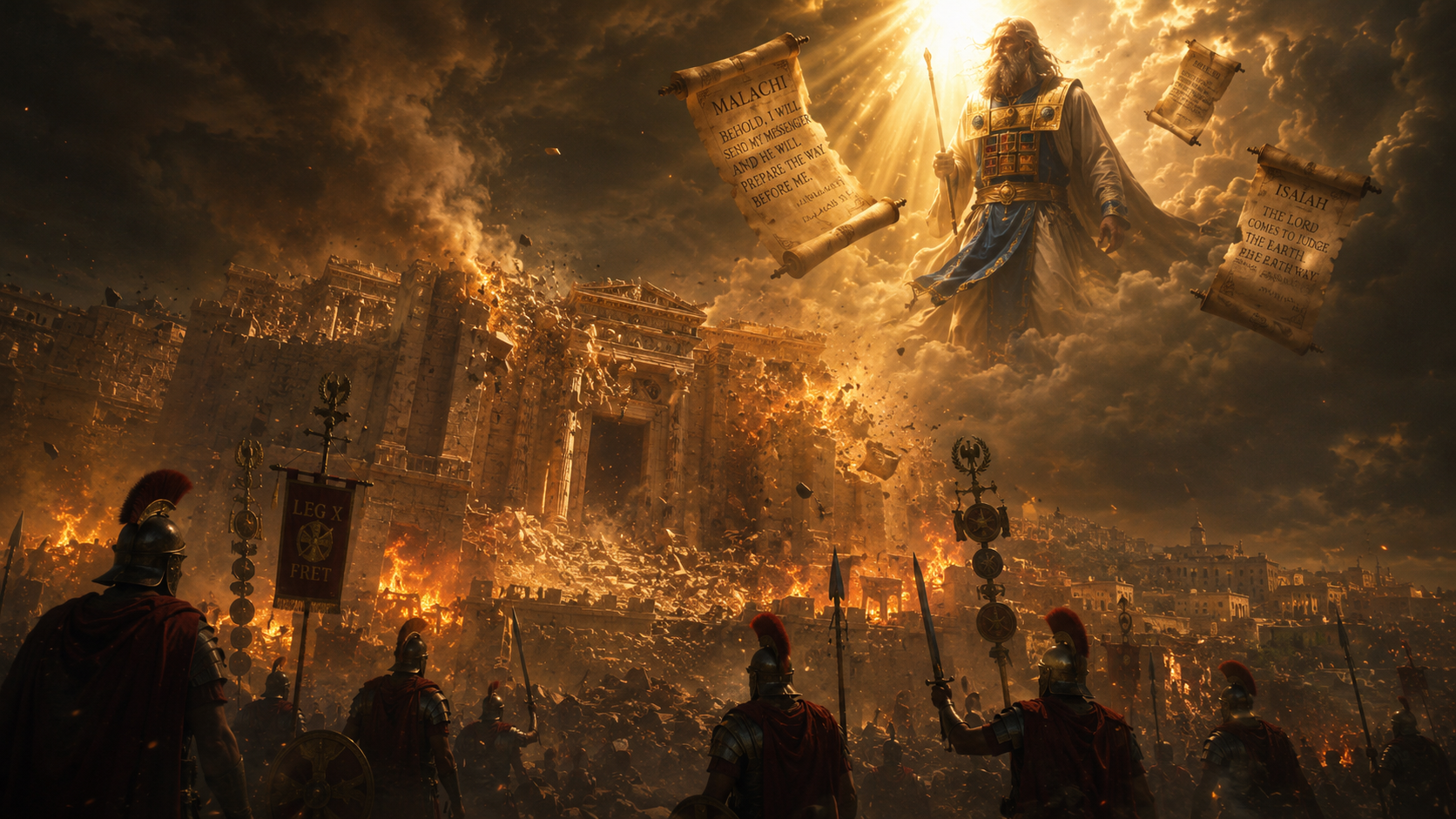
In the Gospel of Mark, the earliest of the canonical narratives, something interesting and unsettling, as we have been finding out in previous blog posts, stirs beneath its surface. While later Gospels and Christian theoretical tradition would emphasize Jesus as the Davidic Messiah (the kingly descendant restoring Israel’s throne) the author of Mark pulls in a radically different direction. Through subtle scriptural allusions, narrative framing, and prophetic rehearsals, this author redefines “Christ” not as a son of David building an earthly kingdom, but as an embodiment of Levi’s purifying destruction. This Christ is no actual historical figure or political liberator. He is an otherworldly force, manifesting through the brutal mechanics of empire, recognized only in the rubble of what was once sacred.

The Davidic Challenge

Consider the pivotal moment in Mark 12:35-37. Jesus poses a riddle to the scribes: How can the Christ be the son of David when David himself, inspired by the Holy Spirit, calls him “Lord” in Psalm 110? It makes absolutely no philosophical or theological sense. “The LORD said to my Lord, ‘Sit at my right hand...’” The implication is deliberate and destabilizing. The expected Messiah, a supposed royal restorer in the line of David, cannot fully capture the figure at the center of this gospel. The author of Mark knows better. He has witnessed, or stands immediately after, the cataclysm of 70 AD. Jerusalem lies in ruins. The Temple, that great symbol of Davidic hopes and priestly power, is gone. No Davidic kingdom has arisen. Instead, something else has occurred: total consumption.

This is not narrative clumsiness. It is philosophical theology sutured directly into story. The Christ of Mark does not descend to reign but to dismantle. His lineage is not literally royal but allegorically priestly-destructive, being Levitical in spirit.

Malachi’s Messenger and the Spirit of Levi

Mark opens by quoting Malachi 3:1 alongside Isaiah: “Behold, I send my messenger before your face, who will prepare your way...” In Malachi, this messenger of the covenant is tied directly to a figure who purifies the sons of Levi. The prophet declares that the LORD will send this “messenger,” and “he will purify the sons of Levi and refine them like gold and silver, till they may offer to the Lord an offering in righteousness” (Malachi 3:3). Yet the same context carries judgment: the messenger arrives like a refiner’s fire, and the day of his coming brings destruction for the unrighteous.

The author of Mark invokes this deliberately. “Levi” here is not the literal tribe or a genealogical claim. It is archetypal, referencing the violent zeal of Levi in Genesis and Exodus, the brother who, with Simeon, slaughtered Shechem’s city to avenge the defilement of their sister and uphold the sanctity of Israel’s God (Genesis 34). Levi is raised up as a force against those who pervert cosmic order. In Malachi, this spirit turns inward: the sons of Levi (the corrupt Jerusalem priesthood) must themselves face refinement or destruction.

To the Markan author, writing in the shadow of Rome’s legions, this is no coincidence. The Christ bears the spirit of Levi. He is the messenger of the covenant who enacts cosmic judgment, not through establishing a throne, but through the annihilation of the old order. Jesus in Mark never explicitly claims the title “Christ” for himself in a straightforward way; he accepts it when others apply it, much as John the Baptist embodies Elijah; not as literal reincarnation, but as fulfillment of role and scripted prophetic pattern. The embodiment is figurative, spiritual, and deeply philosophical: a participation in an eternal archetype that transcends linear time and earthly genealogy.

An Otherworldly Entity, Manifest in Empire

Here the Markan vision grows metaphysical. The true Christ exists outside the ordinary realm of time and space, an agent of the divine will that operates through history’s dominant powers. Scripture itself models this pattern repeatedly.

In Isaiah 10, the Lord GOD declares he will (on behalf of the LORD God) bring consumption upon the land (Isaiah 10:23). Yet the instrument is explicitly the Assyrian king: “O Assyrian, the rod of mine anger... I will send him against a hypocritical nation” (Isaiah 10:5,6). “God” speaks of his own action; history records the empire’s boot. Similarly, Isaiah 45 anoints Cyrus the Persian, a pagan ruler, as God’s “anointed” (Messiah/Christos in Greek translation), the one who will subdue nations and break gates of brass. Daniel 2:37 extends the principle: Nebuchadnezzar of Babylon rules as “king of kings” because “the God of heaven hath given thee a kingdom, power, and strength, and glory.”

The kingdom of God, in this ancient Israelite worldview, is not a theocratic counter-empire. It is the world-ruling power that the Deity cosmically selects and wields as an extension of divine will. The author of Mark, steeped in these texts and living after the fall of Jerusalem, applies the same logic. Rome becomes the rod. The legions that razed the Temple and scattered the priesthood are the manifestation of Levi’s spirit, “the Christ” destroying the sons of Levi who had perverted the covenant.

Mark 13:2 captures the prophecy: “Seest thou these great buildings? There shall not be left one stone upon another, that shall not be thrown down.” How does this occur? Not through a Davidic army or miraculous intervention in the expected sense, but through the impersonal, terrifying machinery of imperial judgment. “The Christ” is and works as and through the empire “God” has anointed for this hour. The destruction is not failure of prophecy but its precise, terrifying fulfillment.

Christ as Cosmic Agency

This reframes everything. “The Christ” in Mark is not a personal savior figure offering individual escape. He is the interface between the transcendent divine and immanent historical forces, the point at which otherworldly judgment irrupts into the material world. The Jesus character serves as the advocating voice and embodied sign of this reality, pointing toward the coming Levi-Rome conflagration. His ministry, parables, and death anticipate the end of the old Temple-based order.

Philosophically, this resonates with deeper patterns in religious thought: the divine does act through what appears secular or even hostile; this is the lesson. History becomes theophany. Empires are not autonomous; they are instruments, however unconscious, of a larger script. The Markan author, witnessing Rome’s victory over the city and sanctuary of Jerusalem, sees not Roman triumph over God but God’s use of Rome to judge and purify. The Christ-spirit of Levi completes what Davidic hopes could not: the radical clearing of the ground for whatever comes next.

This is an absolutely unsettling revelation to later orthodoxy, which harmonized Mark with Davidic genealogies in Matthew and Luke. But the earliest gospel (Mark) resists easy domestication. Its Christ is wilder, more apocalyptic, tied to only the destruction of the priesthood as much as only the redemption of the priesthood. Human beings are not the subjects of its concept of redemption due to the author of Malachi fixing redemption only on the priesthood.

The Stone Not Left Upon Another

Ultimately, the author of Mark invites us to see the Christ not with the eyes of expectation; as in a king on a throne; but with eyes attuned to the patterns of scripture and the convulsions of history. Levi’s spirit, channeled through Rome, did what no Davidic messiah was called to do: it ended an era. The Temple fell. The priesthood was scattered. And in that void, a new understanding of divine power emerged.

What does this mean for us? If “Christ” manifests through the ruling powers of an age to dismantle corrupt religious orders (this is the Bible’s only narrative), where ought we to turn our attention? Are we still awaiting a literal messenger, or do the signs of the times suggest another consumption is prepared?

The Christ of Mark is yet speaking. Not from David’s line, but from the refiner’s fire. Listen closely to the sound of our modern environment. What kingdom will rise from the dust to destroy what priesthood?

Our conversation continues.

Moving Beyond Ritual: Embracing a Deeper Devotional Journey

In our journey of devotional self-discovery, the Bible calls for more than the repetition of rituals. It invites its students into a deeper devotional relationship with it, as Hosea 6:6 declares, “I desired mercy, and not sacrifice; and the knowledge of God more than burnt offerings.” This passage reveals the Bible’s yearning for an authentic connection over ceremonial acts, urging us to transcend ritualistic routines for a richer intellectual and spiritual understanding of our devotional experience.

True devotional growth elevates beyond the confines of rituals, surpassing even the insights of professed religious experts and educators. Psalm 119:99 says, “I have more understanding than all my teachers: for thy testimonies are my meditation.” Unlike rituals that often fail to yield meaningful learning or personal growth, genuine devotion fosters knowledge and application of principles benefiting our living experience.

Understanding Ritual vs. Devotion

Rituals have long played a role in religious traditions, often symbolizing a “sweet savour” to the preferred Deity, as described in Leviticus 3:16. They are performed with the belief that they are pleasing to a Deity and can positively shape and influence that Deity’s thoughts, emotions, and behaviors. However, Jeremiah 7:22 challenges this notion: “I spake not unto your fathers...concerning burnt offerings or sacrifices.” This scripture raises a critical question—if “God” did not command sacrifices, why did Moses introduce them?

In contrast, a living devotion emphasizes personal and spiritual development. Proverbs 11:9 states, “...through knowledge shall the just be delivered.” Devotional growth involves seeking wisdom and understanding, as encouraged in Colossians 1:9: “...be filled with the knowledge of his will in all wisdom and spiritual understanding.” Unlike rituals, which focuses on outward acts, a real experience with the Bible fosters inward transformation.

The Limitations of Ritual

Rituals, while meaningful in context, can become mechanical, losing their spiritual essence. When faith becomes a matter of routine, we risk missing the deeper purpose of our journey. 2 Timothy 3:7 warns, “Ever learning, and never able to come to the knowledge of the truth.” This highlights the danger of engaging in religious acts without achieving true understanding.

Moreover, Hebrews 9:9 reveals the inherent limitation of rituals: they cannot “make him that did the service perfect, as pertaining to the conscience.” Reliance on rituals alone can lead to spiritual stagnation, leaving our belief unfulfilled and disconnected from the intended transformative experience.

The Essence of a Devotional Journey

A true devotional journey is grounded in learning, reflection, and personal connection to scripture. Isaiah 1:17 urges believers, “Learn to do well; seek judgment,” while Isaiah 34:16 encourages, “Seek ye out of the book of the LORD, and read.” These practices encourage a deeper understanding of the Bible’s will and a more sure spiritual or philosophical connection.

Through consistent study and reflection, we can experience transformative growth. Proverbs 18:1 emphasizes the importance of seeking wisdom: “Through desire a man, having separated himself, seeketh and intermeddleth with all wisdom.” Similarly, 2 Timothy 2:15 advises, “Study to shew thyself approved unto God, a workman that needeth not to be ashamed, rightly dividing the word of truth.”

Practical Steps to Transition from Ritual to Devotion

Transitioning from a ritualistic experience to a devotional journey requires intentionality and discipline. Start by cultivating a “sound heart,” as Proverbs 14:30 suggests, and renewing your mindset, as Ephesians 4:23 encourages: “Be renewed in the spirit of your mind.”

Practical Tips for Embracing Devotion:

  1. Engage with the Bible Deeply: Read the Bible with the intent to understand and apply its wisdom. Reflect on how passages relate to your personal journey.

  2. Cultivate a Reflective Practice: Set aside time for exercising what is understood within the Bible, rather than completing religious tasks.

  3. Prioritize Application: Let the wisdom retained and exercised from the Bible expand your understanding. Bring everything learned and experience back to the Bible. Let your insights inform your daily decisions and actions.

Do well

The journey from ritual to devotion is one of devotional growth and transformation. By moving beyond mere routines and embracing a more mentally active and meaningful discipline, we can achieve a richer, more sure connection with the Bible. Reflect on your present spiritual or religious practices—are they merely rituals, or do they inspire internal growth and understanding?

Learn to do well.

Spiritual Sickness: A Call For Devotional Authenticity

In the Bible, Isaiah 40:8 declares, “The word of our God shall stand forever,” implying that the divine message is eternal. Yet, when Isaiah 1:6 states, “From the sole of the foot even unto the head there is no soundness in it; but wounds, and bruises, and putrifying sores,” attention shifts to the spiritual state of a body, not the natural body, but rather a religious body. This passage reveals a deeper symbolism, inviting us to examine our spiritual health in relation to the Bible’s devotional character.

Exposing the Spiritual Illness of the Priesthood

The author of Isaiah isn't critiquing a literal body, but instead the condition of the priesthood. This is evident when Isaiah says, “A people laden with iniquity, a seed of evildoers,” (Isaiah 1:4) and that “the whole head is sick, and the whole heart faint,” (Isaiah 1:5). The text addresses the spiritual leaders, as shown in Isaiah 1:10: “Hear the word of the LORD, ye rulers of Sodom.” The true focus here is on how the error within the priesthood has led to a disconnection with the intended experience within the scriptures.

The error committed by the priesthood is not merely human frailty but represents a corruption of the devotional experience itself. This is further emphasized in Isaiah 59:12-14, which acknowledges the priesthood’s transgressions: “Our transgressions are with us; in transgressing and lying against the LORD, speaking oppression and revolt, conceiving and uttering from the heart words of falsehood.”

These words expose a priesthood that strayed from the scriptures, crafting their own laws instead of following the already existing philosophy within the Bible. The deviation is summarized in Isaiah 29:13: “This people draw near me with their mouth, and with their lips do honour me, but have removed their heart far from me, and their fear toward me is taught by the precept of men.” The priesthood’s reliance on handwritten religious laws, crafted from out of their own heart, diverges from the true spirit of the scriptures.

The Strength of Sin: A Religious Crisis

This abuse of religious authority, rooted in the manipulation of religious law, underscores a deeper spiritual illness. The priests, by enforcing man-made doctrines, betray their role as caretakers of the faith. Isaiah reveals this flaw by comparing the priesthood to Sodom and Gomorrah, a symbol of ultimate moral and spiritual decay. Through the lens of scripture, the priesthood is described as sick, bruised, wounded, and untreated. Their error is not just personal but systemic, condemning the entire body of belief they claim to uphold.

This error is further affirmed in the New Testament: “The strength of sin is the law,” (1 Corinthians 15:16). The priesthood’s obsession with justification through religious law is condemned, mirroring the principle in Romans 3:20: “By the deeds of the law there shall no flesh be justified in his sight.” The laws created by the priesthood foster oppression and falsehood, further distancing their audiences from the heart of the scriptures.

Healing Through Reason and Devotion

Amidst this spiritual decay, the author of Isaiah offers a path to restoration—not through rigid adherence to religious law, but through reason and devotional clarity. Isaiah 1:17-18 urges a turn towards reason: “Learn to do well… Come now, and let us reason together...” Here, the Bible advocates for growth and development through reasoned thought rather than blind obedience to dogma. This principle is reinforced in Ecclesiastes 7:25: “I applied mine heart to know, and to search, and to seek out wisdom, and the reason of things.”

This shift from rigid religious law to reason invites believers to approach their faith with introspection and critical thought. The priesthood, with its laws and inventions, is likened to Sodom and Gomorrah, corrupting the devotional conversation by prioritizing human-made doctrines over Bible knowledge.

The Eternal Warning for Modern Believers

The condemnation of the ancient priesthood extends to our modern-day religious leaders. If the scriptures are eternal, so too is the warning. The handwritten religions of today risk carrying the same errors of the past, fostering a body of belief that is sick, bruised, and wounded. In inheriting these doctrines, modern believers are exposed to the same spiritual dangers and condemnations.

As every religious conversation is born within this world of human error, the concept of “sin” persists, as Ecclesiastes 7:20 reminds us: “There is not a just man upon earth, that doeth good, and sinneth not.” In this context, the "earth" refers to the religious world, where sin—defined by the legalistic grip of the religious law—dominates. Our natural inclination to “believe” is shaped by the religious structures we inherit, structures that often obscure the true essence of devotional purity.

A Call to Devotional Authenticity

Isaiah’s message is one of healing, but healing requires acknowledgment of illness. Just as the prophet Isaiah declared, “I am undone” (Isaiah 6:5), we too must recognize the ways in which our own devotional practices may be influenced by religious systems that have lost their way. True health, both spiritually and devotionally, comes from breaking away from man-made doctrines and embracing the intended experience and philosophy within the scriptures.

This call to reason and authenticity is the key to transcending the “cave” of religious falsehood, allowing believers to reclaim their devotional conversation in its purest form.