What if one of the most familiar assumptions about Jesus and Christian prophecy is not actually what the Gospel of Mark says?
Christian tradition commonly teaches that Jesus predicted his own return at the end of the age. Yet when we slow down and read Mark carefully, a fascinating distinction appears: Jesus does not say, “I will return.” Instead, he repeatedly speaks about the coming of the Son of Man. That distinction becomes especially significant when Mark is read alongside Daniel, Isaiah, and the broader world of Hellenistic Jewish apocalyptic thought.
The question, then, isn’t, “Is Jesus coming back?” The more important question is: Who is the Son of Man, and what exactly is Mark saying will happen when this figure comes?
The completely changes the way one understands Mark 13, the destruction of Jerusalem, the fall of the Temple, and the meaning of prophecy itself.
God Says He Will Act, But Then a King Does It
There is an important pattern throughout the Hebrew Scriptures that is often overlooked. Israel’s Deity announces that something will happen, but he does not become the visible actor who performs it. Instead, God works through human rulers and their governments.
Isaiah 10 provides one of the clearest examples: Assyria becomes the instrument through which judgment is carried out. The Assyrian empire has its own ambitions, its own military power, and its own political objectives, yet Isaiah interprets its historical actions within a larger divine purpose. Assyria acts as an empire, but Isaiah sees something more happening through that empire.
The same pattern appears with Babylon: Babylon becomes the instrument through which Jerusalem experiences destruction. The city is conquered, the sanctuary is devastated, and an established political and religious order is overturned. Yet the biblical interpretation is not simply that Babylon happened to be stronger. Babylon becomes an instrument of divine judgment, its king becoming the “servant” of Israel’s Deity.
Then the pattern reverses: Cyrus, a foreign Persian ruler, becomes the instrument through which Babylon falls and restoration becomes possible. This creates an extraordinary philosophical principle:
The agent accomplishing something is not necessarily the ultimate source or meaning of what is happening.
Assyria is not God merely because Isaiah understands Assyria as an instrument of God's judgment. Babylon is not God because it becomes an instrument of destruction. Cyrus is not God because he becomes an instrument of restoration. The king acts; the prophet interprets; history becomes the medium through which divine purpose is understood. That same principle provides an entirely different way of approaching the Jesus character in Mark.
Did Jesus Actually Say He Would Return?
Mark 13 has one of the most important verses in the entire discussion of Jesus and the Christian end times. It is also one of the passages most easily read through later Christian assumptions. Jesus predicts the destruction of the Temple; his disciples ask about the signs associated with these events; Jesus describes persecution, upheaval, deception, tribulation, and the collapse of the existing order. Then he says:
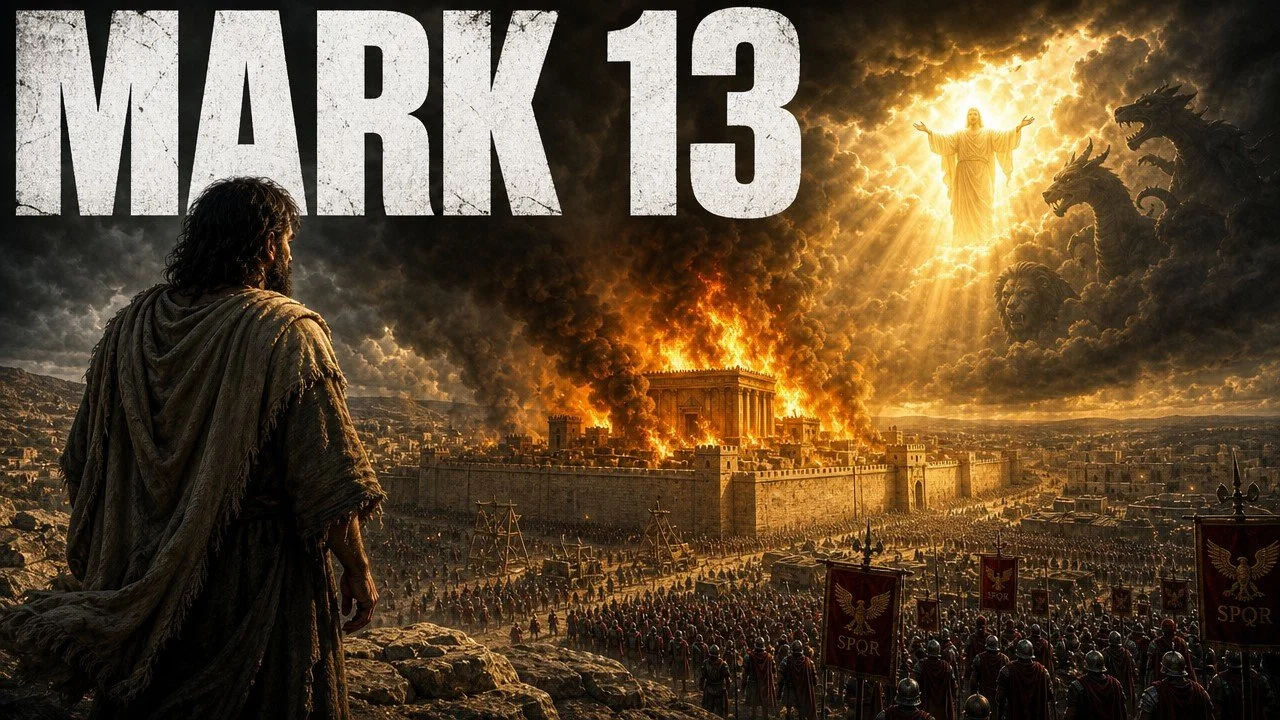
“And then shall they see the Son of man coming in the clouds with great power and glory” (Mark 13:26).
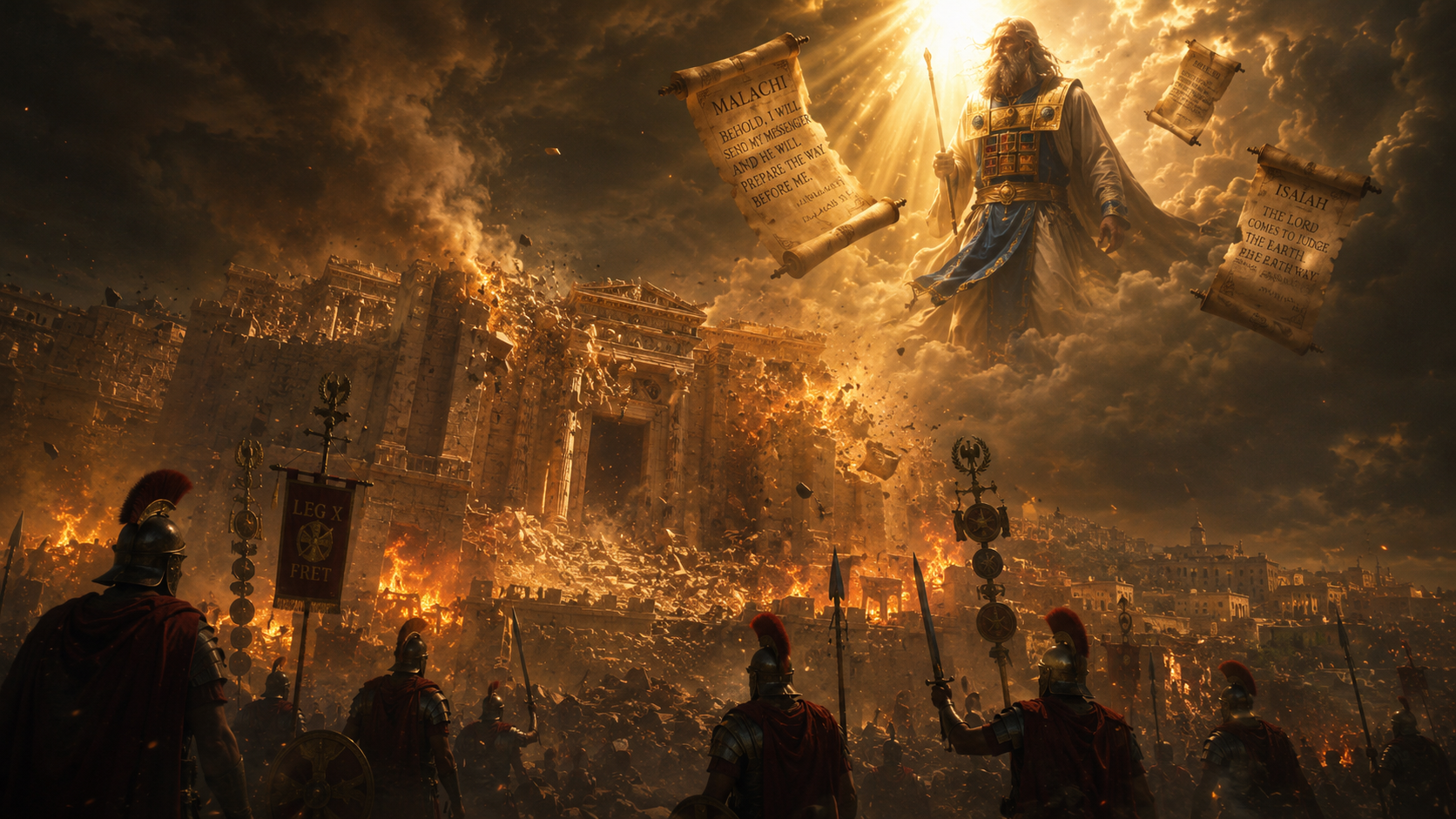
Notice what the passage actually says. It does not say, “Then they will see ME returning.” It says the Son of Man. That may sound like a minor difference, but it is truly important when we take the Bible’s language and context seriously. The Son of Man is not a phrase that begins with Christianity. Its imagery reaches directly into Daniel 7, where a figure “like the Son of Man” comes with the clouds of heaven and receives dominion, glory, and a kingdom. And what stands opposite this figure? Beasts.
“Beasts” represent kingdoms or oppressive pagan religious governments. They rise, exercise authority, and eventually lose their dominion. The Son of Man appears within this symbolic drama as the figure associated with the replacement of those powers. The imagery is therefore not really about an individual traveling through the sky, but about the overthrow of political power and the arrival of another order. One must also remember that as those beasts are linked to real empires, so too ought the Son of Man.
The Son of Man Was Already an Apocalyptic Idea
This becomes even more interesting when we consider the development of Son of Man imagery within Hellenistic Jewish literature. The period between the Hebrew Scriptures and the New Testament was not intellectually static. Jewish writers living in a Hellenistic world interpreted older Hebrew scriptural traditions through new philosophical, political, and apocalyptic frameworks. The Son of Man imagery developed within this environment as a figure associated with judgment, righteousness, wisdom, authority, and the removal of oppressive political and religious rulers.
In the literature of the book of Enoch, where the figured called the Son of Man in the book of Mark actually originates, the Son of Man becomes an exalted figure connected with judgment against kings and powerful authorities. The imagery is therefore deeply concerned with the reversal of earthly power and the meaning is unmistakable: Those who appear permanently powerful are not permanent. Kings can lose their thrones, empires can lose their dominion, institutions can collapse, and systems that believe they possess divine legitimacy can eventually find themselves standing under judgment.
That is exactly the kind of imagery Mark places into the mouth of the Jesus character.
Jesus as the Herald of the Son of Man
This raises a very real possibility: What if Jesus in Mark is not primarily announcing, “I am going to return”, but is acting as the herald, advocate, and prophetic spokesman for the coming Son of Man, a literary figure already mythologized within Hellenistic Jewish Literature?
Consider the biblical pattern: Isaiah announces Assyria's role in divine judgment, but Isaiah is not Assyria; Jeremiah announces Babylon's coming, but Jeremiah is not Babylon; Isaiah announces Cyrus, but Isaiah is not Cyrus. The messenger does not have to be identical with the agent whose arrival he announces.
Likewise, the Jesus character can announce the coming of the Son of Man without the language necessarily meaning that Jesus himself is the figure being described, because he is not describing himself. This possibility becomes especially compelling because Jesus' prediction about the Son of Man occurs within a discussion about Jerusalem and the Temple, making the setting establishing his speech matter.
The author of Mark is not talking about an isolated cosmic event unrelated to history. They are speaking about the destruction of the Temple, the crisis surrounding Jerusalem, and the collapse of an existing religious and political structure. The Son of Man appears within that context as the symbol of what comes after the old order has been judged.
Mark 13 Is About More Than the End of the World
This is where popular Christian “end times” interpretations become misleading. Many modern subscribers to popular Christian theory approach Mark 13 expecting to discover a coded prediction about the twenty-first century, modern governments, digital technology, or some future global system. But Mark's immediate narrative concern is much closer to home: Jerusalem, The Temple, The religious establishment, The destruction of an existing order.
The Temple was not just a religious building. It represented priestly authority, sacrifice, holiness, religious administration, national identity, and the institutional relationship between Israel and the Deity of Israel. When Jesus predicts its destruction, he is not just predicting the demolition of architecture, he is announcing the collapse of an entire religious world. The Son of Man appears within that announcement as the figure associated with the reversal of the old order, and we ought to already know that this mythological literary figure is not the one scheduled to execute that judgment.
The Temple Falls, Then the Son of Man Appears
This makes the structure of Mark 13 fascinating. First comes the Temple, then comes its predicted destruction, then comes crisis and tribulation, then comes the Son of Man; the sequence is worth contemplating. The Son of Man does not appear in an empty theological vacuum; his appearance is connected to the collapse of a particular world religion and its economy.
Isaiah 10 and Mark 13 May Share a Deeper Philosophy
Now return to Isaiah 10: God says judgment will happen and that he will do it, yet Assyria becomes the instrument. Return to Babylon: Jerusalem experiences destruction through a foreign empire that Israel’s Deity says he is empowering. Return to Cyrus: A Persian king becomes the instrument through which another divine purpose is accomplished. Now look at Mark: the Jesus character announces the coming destruction of Jerusalem and its Temple by a mythological figure ultimately representing Rome. The pattern is striking:
Israel’s Deity announces a destruction that he will execute. An active world-ruling military accomplishes that destruction for Israel’s Deity. The old order falls. Another order emerges.
God will not personally descend into history to physically perform every action described by prophetic language; no God will or can do this. The Bible’s imagination works differently. God acts through kings. God acts through empires. God can act through political events. God can act through historical upheaval. The Deity of Israel can be understood as acting through the transformation of human consciousness. The instrument is not necessarily the purpose.
What If the Coming of the Son of Man Is Also About Consciousness?
This is where the Son of Man becomes philosophically fascinating. The coming of the Son of Man can be considered not merely as the arrival of a supernatural individual but as the arrival of understanding. The mind suddenly sees what it could not see before. It recognizes that institutions claiming divine authority can become corrupt. It recognizes that political power is temporary. It recognizes that religious systems can become more concerned with preserving themselves than with preserving the principles they were created to represent. It recognizes that the powerful are not necessarily righteous simply because they are powerful, and it recognizes that the collapse of something familiar is not necessarily the destruction of everything meaningful. Sometimes the collapse of an old structure is the beginning of a new understanding, and this is exactly the point that the author writing the book of Mark is making.
The Real Danger Is Reading Mark Backward
Yet there is a deeper problem here. Many readers approach Mark already knowing what they believe Mark must mean. They have inherited Christian theories about the Second Coming, the Rapture, the Antichrist, the end times, and the return of its Jesus. They open Mark 13 and look for confirmation, but what happens if we reverse the process?
What happens if we begin with Mark? What happens if we ask what Mark's Jesus actually says? What happens if we distinguish Jesus from the Son of Man rather than automatically identifying them? What happens if we examine Daniel 7 before interpreting Mark 13? What happens if we consider how Hellenistic Jewish apocalyptic thought developed in this Hellenistic period and influenced the gospels? What happens if we take Jerusalem and the Temple seriously as the historical center of the prophecy? Suddenly, the conversation becomes much more complicated, and much more interesting.
The goal is not to destroy faith. The goal is to read more carefully. The faith within the book of Mark is not the present Christian theoretical faith; we ought to understand that.
Do Not Confuse the Messenger With the Message
Perhaps the deepest philosophical lesson is the distinction between the messenger and the message.
Isaiah is not Assyria. Jeremiah is not Babylon. Isaiah is not Cyrus. Jesus is not the Son of Man. Jesus can stand as the prophetic voice pointing toward the Son of Man and the author writing the book of Mark allows this conclusion. The messenger announces, the listener watches, the historical event unfolds, the interpreter gives it meaning; this pattern appears repeatedly throughout biblical literature, and once we recognize it, the language of Mark becomes much more interesting.
Jesus is not simply telling people to wait passively for his supernatural return. He is telling his then audience, an audience already passed away, to watch for the Son of Man who, like as God was represented by Assyria, is ultimately represented by Rome. While the Christian is “looking for Jesus,” the Jesus character looked for the Son of Man. The Son of Man manifested 70AD. The “looking” and the “watching” is to now occur within.