In our ongoing experiment of weighing the Pauline doctrine with the belief of the Jesus character, one tension refuses to stay buried: the identity of “the Christ” himself. Where Paul confidently roots his message in royal ancestry; “Remember that Jesus Christ of the seed of David was raised from the dead according to my gospel” (2 Timothy 2:8); the Gospel of Mark introduces a pointed disruption. Rather than quietly accepting Davidic descent as the foundation for messianic legitimacy, the author of Mark crafts a narrative Jesus who publicly interrogates it.
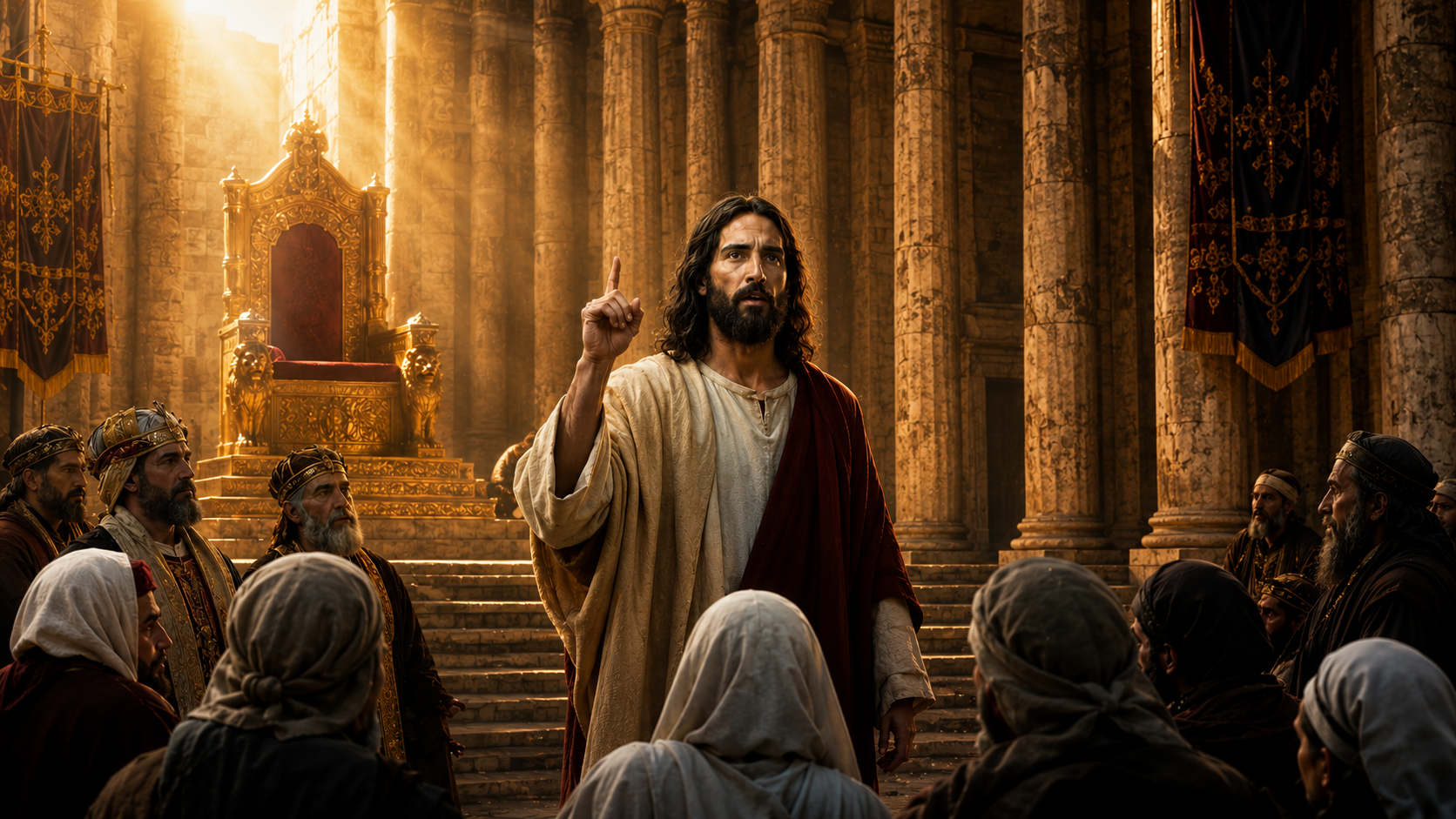
In the heart of the temple, amid scribal teaching, Jesus asks: “How say the scribes that Christ is the son of David?” (Mark 12:35). He follows with the Psalm in which David himself calls the coming figure “Lord,” allowing the contradiction to linger unresolved. This is not random. The author of Mark knows what they are doing. This is a deliberate narrative intervention. By placing this question onto Jesus’ lips, the author of Mark, writing after Paul’s letters had begun shaping religious communities, pushes back against the Davidic framework. “The Christ,” in this telling, does not need to inherit David’s throne to fulfill his role. Something deeper, more disruptive, is at work.
That “something” surfaces in the Gospel’s very first verses. Mark opens by invoking Malachi’s messenger who prepares the way (Mark 1:2). The quotation deliberately draws readers into Malachi’s broader oracle, where the covenant is not entrusted to a royal house but to Levi: “My covenant was with him of life and peace… the law of truth was in his mouth… he walked with me in peace and equity, and did turn many away from iniquity” (Malachi 2:5-6). Levi stands as guardian of covenant integrity. The implication is quiet but major: the true messenger of the covenant carries Levi’s spiritual DNA, not David’s royal blood.
Zeal Against Defilement
This Levitical identity redefines the Messiah’s mission. Mark’s Jesus offers no vision of re-establishing David’s kingdom. He instead unleashes sharp critiques against religious authorities who prioritize tradition over his God’s commandments (Mark 7:9) and pronounces the Temple’s total destruction (Mark 13:2). These are acts of purification and dismantling; temple-cleansing, priesthood-challenging language that echoes Levi’s ancient zeal.
Again, as I said in the last blog, Genesis 34 preserves Levi’s legacy: when defilement threatened covenant integrity, Levi acted decisively to defend his God’s honor, even at great cost. Mark’s portrayal channels this same disruptive fire. “The Christ” here (in the opinion of the author of the book of Mark) functions as Levi’s spiritual heir, exposing hypocrisy, judging exploitation, and tearing down barriers of empty ritual that obstruct unmediated relationship with the Father. Redemption is not a charismatic declaration tied to royal vindication but present alignment through obedience and the costly work of purification.
The Baptism of Fire and the “One to Come”
John the Baptist’s proclamation sharpens this Levitical vision. He announces one mightier than himself who will baptize with the Holy Ghost and fire, laying the axe to the root and burning chaff with unquenchable fire (Mark 1:7,8; Luke 3:16,17). Far from a private spiritual experience, this imagery signals institutional judgment. John’s rebuke of the Pharisees and Sadducees as a “generation of vipers” (Matthew 3:7) targets religious leadership, the “sinners in Zion” (the priesthood) and hypocrites (religious leaders) whose corruption provokes divine wrath (Isaiah 33:14; 4:4).
Malachi reinforces the sequence: an Elijah-like forerunner prepares the way for the messenger of the covenant, who will refine the sons of Levi (the priesthood of Jerusalem) like silver and gold (Malachi 3:1-3). John fulfills the Elijah role through his confrontation with authority, mirroring Elijah’s stand against royal power. His imprisonment signals the shift: the “kingdom of God is at hand,” marking the arrival of the “day of the LORD” and the Levi-like agent of enforcement.
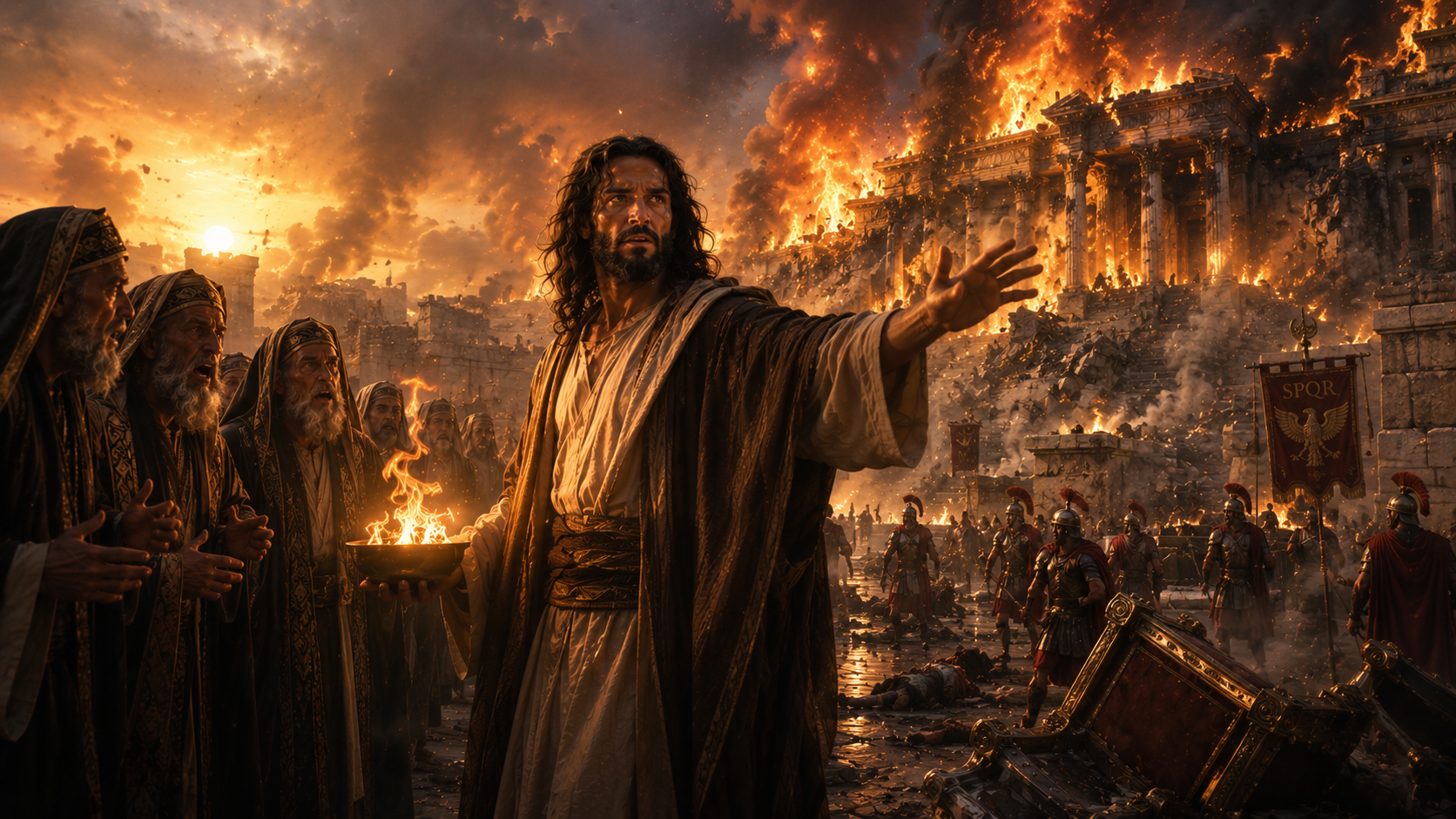
Prophetic patterns across Isaiah and Joel portray this agent not necessarily as a solitary teacher but as a collective, disciplined force, indeed an army moving “as one man,” with unbroken ranks and intact equipment (Isaiah 5:26,27; Joel 2:7,8). Such language aligns with Israel’s Deity commissioning kingdoms (Assyria as the “rod of mine anger,” or Babylon as instruments) to execute judgment on a hypocritical priesthood and leadership. In the first-century context, Rome becomes the latter-day Levi: the cosmically sanctioned power that dismantles the Temple and its corrupt order, fulfilling the refining fire.
Mark’s Jesus does not feed into or resolve the issue of Paul’s Davidic king whose cross-work secures believers through faith in a finished transaction. Instead, this Jesus character foretells of a Levi-like disruptor, and in so doing, calls for heart-rewriting obedience, confronting institutional hypocrisy, and preparing the way for covenant purity through judgment.
Divergent Philosophies of Redemption
Paul’s Christ extends the Davidic line, offering rest (only to the conscience) through identification with a risen and ascended royal figure. Mark’s author, by contrast, relying on the book of Malachi as their foundation, inserts the spirit of Levi to challenge this foundation. The Messiah’s role shifts from royal fulfillment to covenant enforcement: purifying the priesthood, dismantling corrupted machinery, and for the sake of restoring direct obedience to the Father’s will. The “one” who comes after John (who is not the Jesus character) enacts this through fire and judgment, ultimately manifesting as the historical force of Rome acting as the servant of Israel’s Deity, much as earlier empires served that same Deity in prophetic history.
The belief of the author of the book of Mark and the doctrine of Paul are not harmonious variations but competing visions. One prioritizes a throne-room vindication and accomplished cosmic exchange. The other envisions a refiner’s fire that consumes violators of the name and law of Israel’s Deity, targeting leadership that has betrayed the covenant. Mark’s Jesus, questioning “the Christ’s” Davidic sonship while a channeling of Levi’s zeal hangs in the background, stands as a profound dissent.
By refusing to comprehend the difference between the Jesus character of the gospels and the Christ character of the Pauline epistles, the deeper conversation yet emerges. The “kingdom” in Mark burns with Levi’s purifying intensity; judging from within, dismantling barriers, and calling for costly alignment at the cost of the city and sanctuary of Jerusalem; rather than awaiting a Davidic occupant. What other fault lines reveal themselves when we allow these contrary doctrines to speak on their own terms? I dare say that this experiment continues.